
Designing a home is exciting. You choose the colours, furniture, lighting, flooring and finishes, and gradually watch an empty space become your own.
But interior design is also full of decisions that can be difficult to reverse.
A beautiful piece of furniture may be completely wrong for the room. A popular colour may look very different under your home’s lighting. A kitchen may look impressive but become frustrating to use every day. Even something as simple as choosing the wrong curtain length can affect the way an entire room feels.
The good news is that most interior design mistakes are avoidable when you think about the home as a complete space rather than a collection of individual products.
Here are 25 common mistakes to watch out for when planning a new interior or renovating an existing home.
1. Buying Furniture Before Measuring the Room
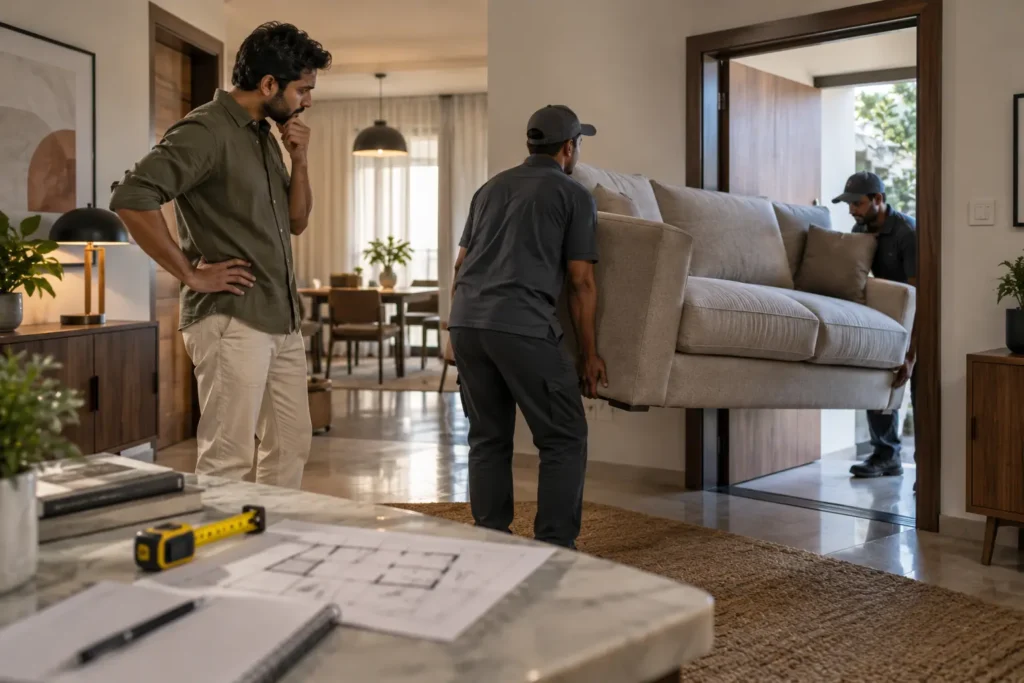
One of the easiest mistakes to make is falling in love with a sofa, dining table or bed before checking whether it actually fits.
Showroom furniture can look perfectly proportioned because it is displayed in a large space. Your room may tell a completely different story.
Measure the room, doorways, passages and available wall space before purchasing large furniture.
A few minutes with a measuring tape can prevent an expensive mistake.
2. Choosing Looks Over Function
A home should look beautiful, but it also needs to work.
A dining table that leaves no comfortable space around the chairs, a wardrobe with insufficient storage or a beautiful kitchen that is difficult to use will eventually become frustrating.
Before choosing a design, ask a simple question:
How will I use this space every day?
Function should establish the foundation. Aesthetics should build on it.
3. Using Too Many Different Styles
Mixing design styles can create an interesting interior when done intentionally.
The problem begins when every room follows a completely different visual language.
A modern living room connected to a heavily traditional dining area and an unrelated industrial kitchen can make the home feel disconnected.
You don’t need identical furniture throughout the house. Instead, maintain a few common elements such as colour, material, wood tone or lighting style to create continuity.
4. Ignoring Furniture Proportions
Furniture doesn’t need to be small simply because the room is small.
What matters is proportion.
An oversized sofa can overwhelm a compact living room, while furniture that is too small can make a large room feel strangely empty.
Think about the relationship between the furniture and the room rather than looking at individual pieces in isolation.
5. Depending on One Light Source
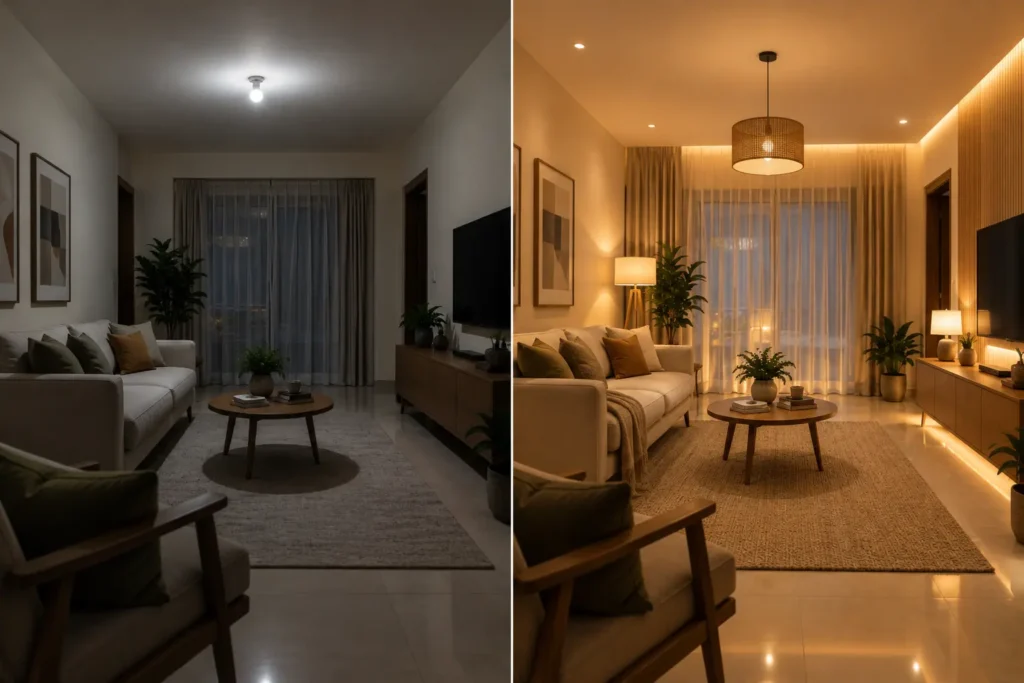
A single ceiling light rarely creates the best atmosphere.
It may provide enough illumination to see the room, but it won’t necessarily make the space comfortable or visually interesting.
Good interior lighting usually combines several layers:
- Ambient lighting for general illumination
- Task lighting for specific activities
- Accent lighting for architectural features and decorative elements
A combination of ceiling lights, wall lights, pendant lights, floor lamps and concealed lighting can make a significant difference.
6. Choosing Paint Colours From a Small Sample
A colour that looks perfect on a small sample may appear completely different when applied across an entire wall.
Natural daylight, artificial lighting, flooring and surrounding materials can all influence how a colour is perceived.
Always test paint colours in the actual room and observe them at different times of the day before making a final decision.
7. Using Too Many Colours
Colour adds personality, but too many competing colours can make an interior feel visually busy.
Instead of choosing a separate dominant colour for every element, create a simple palette.
A useful approach is to establish a base colour, one or two supporting colours and a few accent tones.
This creates variety without making the room feel chaotic.
8. Making Everything Match
The opposite mistake is making everything match too perfectly.
Matching furniture sets, identical finishes and the same colour everywhere can make a home feel more like a showroom than a personal space.
Introduce variation through textures, materials, artwork, furniture shapes and accessories.
A cohesive interior doesn’t need to be identical from one room to another.
9. Blocking Natural Light
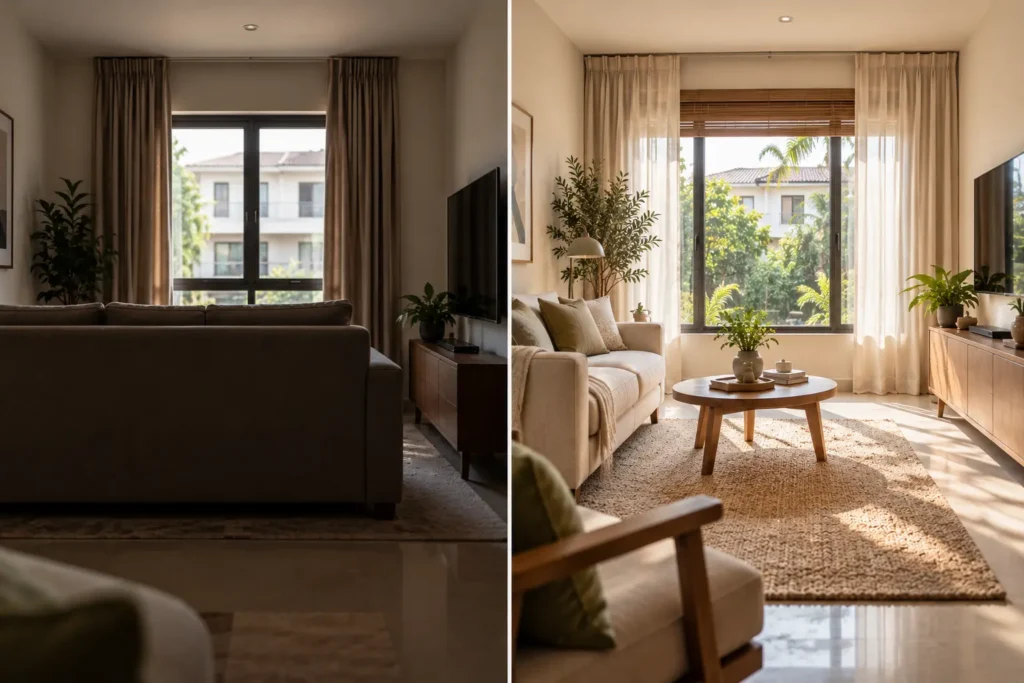
Large furniture placed directly in front of windows can reduce the amount of daylight entering a room.
Dark rooms often feel smaller and less inviting.
Where possible, keep windows visually open and use window treatments that provide privacy without unnecessarily blocking light.
Natural light should be treated as part of the interior design rather than something that simply comes through the windows.
10. Ignoring Storage Until the End
Storage is often treated as something to solve after the design is finished.
That can create problems.
If wardrobes, kitchen storage, utility cabinets and other storage areas aren’t planned early, you may eventually have to add bulky furniture that wasn’t part of the original design.
Think about storage during the initial planning stage.
Ask what needs to be stored, how often it is used and where it should be located.
11. Designing a Kitchen That Looks Good but Doesn’t Work
A kitchen needs to support movement, preparation, cooking and cleaning.
A beautiful kitchen can still be poorly designed if the refrigerator, sink and cooking area are inconveniently positioned or if there isn’t enough usable worktop space.
Think about workflow before choosing finishes.
The best kitchen isn’t simply the one that photographs well. It is the one that remains comfortable after years of daily use.
12. Forgetting About Electrical Points
Electrical planning is easy to overlook during the excitement of selecting colours and furniture.
But once the furniture is installed, discovering that a socket is hidden behind a cabinet or that there is no convenient charging point can be frustrating.
Plan electrical points around actual furniture placement.
Consider televisions, bedside tables, kitchen appliances, workspaces, lighting and future equipment before finalising the electrical layout.
13. Installing Curtains at the Wrong Height
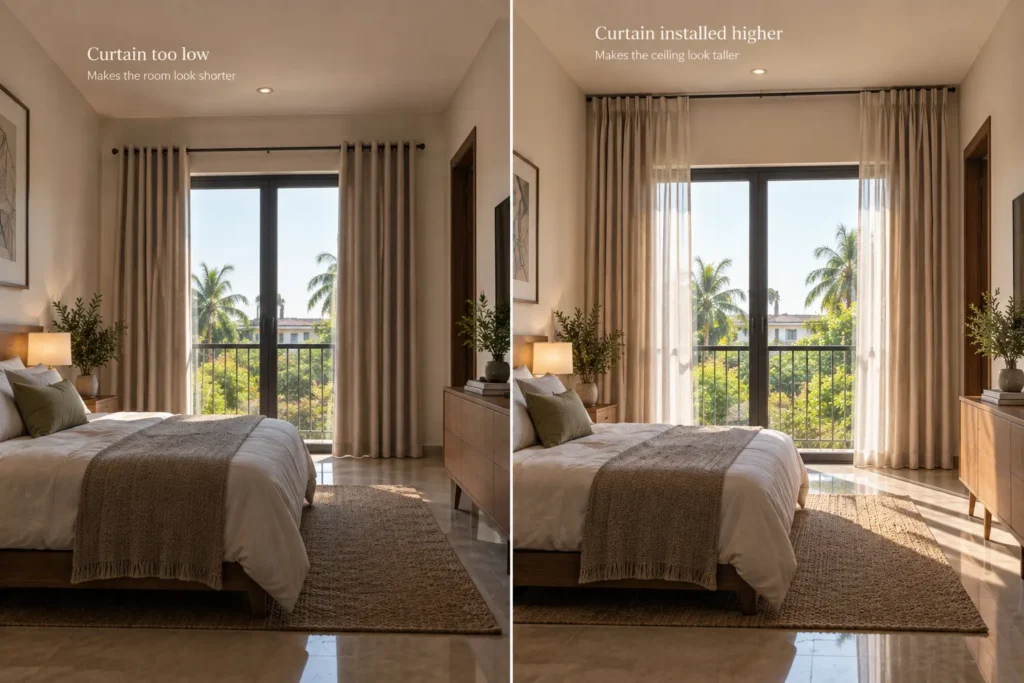
Curtains can influence the perceived height of a room.
Curtains mounted too low or ending awkwardly above the floor can make a room feel visually shorter.
In many interiors, positioning the curtain rod higher and allowing the fabric to fall closer to the floor creates a more elegant vertical line.
The exact installation should still depend on the window, ceiling and overall room design.
14. Filling Every Wall
Empty wall space isn’t necessarily wasted space.
A room needs areas where the eye can rest.
Covering every wall with artwork, shelves, panels and decorations can make an interior feel crowded.
Instead, choose a few meaningful focal points and allow some negative space around them.
Sometimes restraint creates more impact than decoration.
15. Choosing Trendy Designs Without Considering Longevity
Interior trends change quickly.
A design that looks fashionable today may feel dated several years later.
This doesn’t mean you should avoid trends completely. Use them selectively.
Large, expensive or difficult-to-change elements are usually better kept timeless, while smaller accessories and decorative items can reflect current trends.
This gives you flexibility to refresh the home later without starting over.
16. Ignoring the Ceiling
The ceiling is often forgotten because most attention goes to walls and furniture.
But the ceiling can influence the entire atmosphere of a room.
Lighting, ceiling height, beams, panels and simple architectural details can all contribute to the design.
At the same time, not every room needs an elaborate false ceiling.
Sometimes a simple ceiling with carefully planned lighting looks cleaner and more spacious.
17. Choosing Materials Only for Appearance
A material can look beautiful and still be unsuitable for a particular application.
Kitchen surfaces, bathroom finishes, wardrobes and high-use furniture need to withstand the conditions they will experience.
Consider moisture, heat, cleaning, daily wear and maintenance before choosing materials.
The best material isn’t necessarily the most expensive one. It is the one that suits the application and your lifestyle.
18. Forgetting About Maintenance
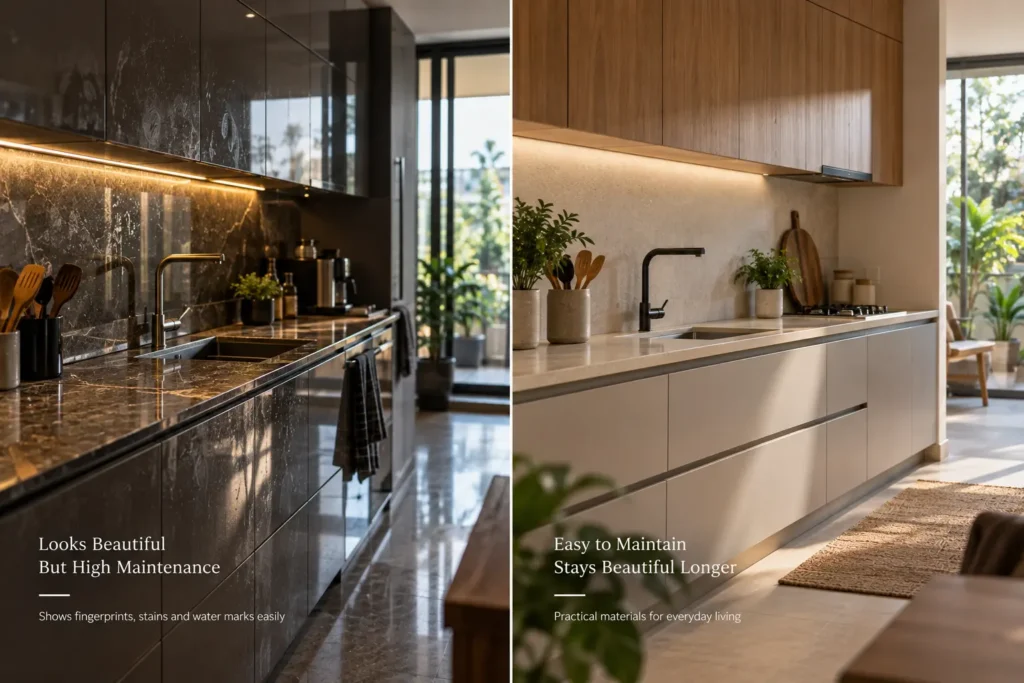
A design may look spectacular on the day it is completed.
The real test begins months later.
Highly textured surfaces, difficult-to-clean finishes, excessive open shelving and delicate materials may require considerably more maintenance than expected.
When choosing finishes, ask yourself:
Will I still be happy maintaining this five years from now?
A beautiful home that is easy to maintain can be more satisfying than one that constantly requires attention.
19. Making the TV the Only Focal Point
The television naturally attracts attention, but it doesn’t always need to dominate the entire living room.
A well-designed TV wall can become part of the overall composition rather than the only feature.
Balance it with storage, artwork, lighting, textures or architectural elements.
The goal is to make the TV area feel integrated into the room.
20. Buying Too Many Decorative Items
Decorations are useful for adding personality, but quantity doesn’t necessarily create a better interior.
Too many cushions, vases, figurines, frames and accessories can make surfaces look cluttered.
Instead, choose pieces that have meaning or contribute something visually useful.
A smaller number of well-selected objects often creates a more sophisticated result.
21. Ignoring the Way Doors and Drawers Open
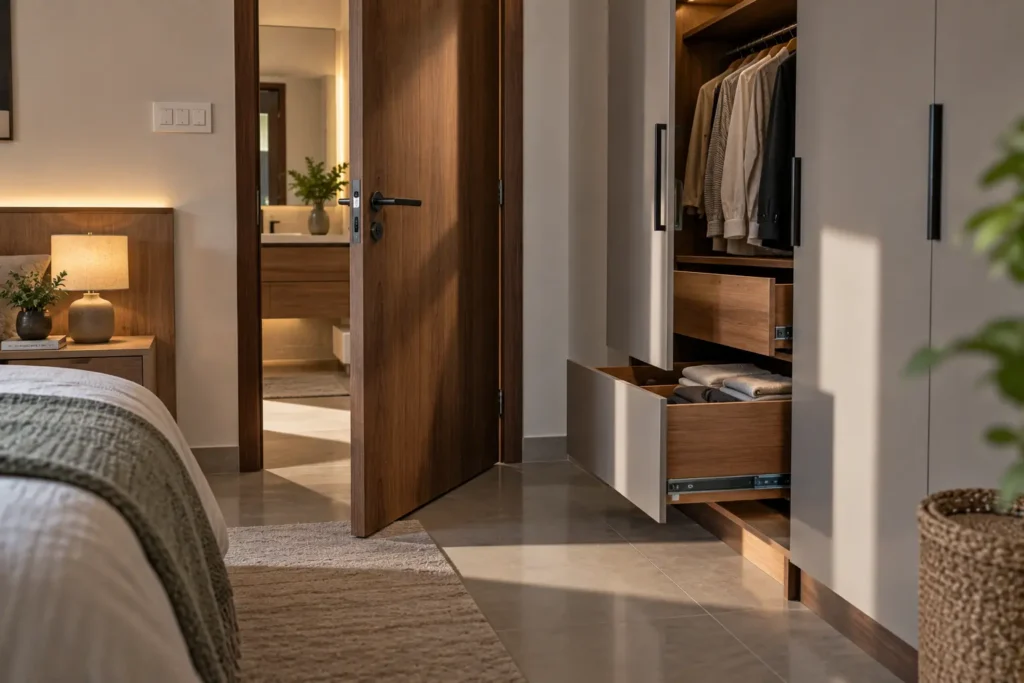
This is a small detail that can cause surprisingly large problems.
A wardrobe door may collide with a bed. A kitchen drawer may hit another cabinet. A bathroom door may interfere with movement.
These conflicts are usually easy to prevent during planning.
Before finalising furniture, check the opening direction and clearance of every door, drawer and cabinet.
22. Designing Each Room in Isolation
A home is experienced as a journey from one space to another.
When the living room, dining area, kitchen, hallway and bedrooms have completely unrelated finishes, the overall home can feel disjointed.
Think about transitions.
You can use consistent flooring, complementary colours, repeated materials or similar lighting details to connect different spaces.
23. Not Considering the Climate
Interior design isn’t only about appearance.
The local climate can influence material selection, ventilation, moisture management and maintenance.
For homes in warm or humid environments, materials and finishes should be selected with those conditions in mind.
Good design responds to the environment as well as the homeowner.
24. Copying a Reference Image Exactly
Reference images are extremely useful.
They help communicate your preferred style, colours, materials and atmosphere.
But a reference image was created for a specific room, with specific dimensions, lighting and furniture proportions.
Trying to reproduce it exactly in another home may not produce the same result.
Use inspiration images to communicate the feeling you want, then adapt the ideas to your home’s actual architecture and requirements.
25. Starting the Work Without a Clear Plan
Perhaps the biggest mistake is beginning interior work before the major decisions have been coordinated.
Furniture, electrical points, lighting, ceiling design, flooring, storage, colours and materials all affect one another.
Changing one decision halfway through the project can create problems elsewhere.
Before work begins, establish a clear design direction and coordinate the important details.
A good plan doesn’t mean everything must be predictable. It simply reduces unnecessary changes and helps the finished home feel intentional.
How to Avoid Most Interior Design Mistakes
You don’t need to become an interior designer to make good decisions for your home.
Start by understanding how you live.
Think about your daily routines, storage needs, preferred style, maintenance expectations and the way your family uses each room.
Then consider the home as a complete system.
Ask questions such as:
- Does the furniture fit the room?
- Is there enough storage?
- Can people move comfortably?
- Is the lighting appropriate?
- Are the materials suitable for the space?
- Can the surfaces be maintained easily?
- Do the different rooms feel connected?
- Will the design still work several years from now?
These questions are often more valuable than simply following the latest interior design trend.
Final Thoughts
A successful interior isn’t created by choosing the most expensive furniture or following every new design trend.
It comes from making hundreds of small decisions that work together.
The right proportions, practical storage, good lighting, suitable materials and thoughtful planning can make a home feel comfortable and complete.
And the best time to identify potential problems is before the work begins.
If you’re planning a new home interior or renovating an existing one, taking time to plan the design properly can save you from expensive changes later.
Planning Your Home Interior?
At Inddecore Interio, interior design can be planned around your home’s layout, lifestyle, storage requirements and preferred style.
Whether you’re designing a compact apartment, a family home or a larger villa, thoughtful planning can help you create an interior that looks good, functions well and continues to work for you over time.
Frequently Asked Questions
What is the most common interior design mistake?
One of the most common mistakes is making design decisions individually without considering how they work together. Furniture, lighting, storage, colours and materials should be planned as part of one overall design.
Should I choose furniture or the interior design first?
It depends on the project, but major furniture dimensions and requirements should be considered early. The room layout, electrical points, lighting and storage can then be designed around how the space will actually be used.
How can I avoid making expensive interior design mistakes?
Start with a clear plan. Measure the space, define your requirements, establish a design direction and finalise important decisions before installation begins. Professional design planning can also help identify practical problems before they become expensive changes.
Should every room have the same interior design style?
Not necessarily. Different rooms can have their own character, but using complementary colours, materials or design elements can help the entire home feel cohesive.
Are interior design trends worth following?
Trends can provide inspiration, but they shouldn’t determine every major decision. For permanent or expensive elements, consider whether the design will continue to suit your lifestyle and preferences over time.
How important is lighting in interior design?
Very important. Lighting affects how colours, materials, furniture and architectural details are perceived. Combining ambient, task and accent lighting can make a room more comfortable and visually balanced.