
In most Kerala homes, the day starts and ends in one small corner. A lamp is lit, a few quiet minutes pass, and the house feels a little calmer. Yet when interiors are planned, that corner is often the last thing anyone thinks about. It gets squeezed beside a staircase or pushed into a leftover gap, and a ready-made mandir gets dropped in at the end.
It doesn’t have to go that way. A pooja space can be tiny and still feel special, if you plan it early and match it to how your family actually uses it. Here is how to do that, with 12 layouts that work for flats in Kochi, independent houses in Thrissur and family homes in Malappuram.
Start with the spot, not the style
Before you think about carvings or colours, decide where the pooja space will live. Three things matter more than the design itself.
Quiet. Avoid placing it right beside the main door, in a busy passage or against a bathroom wall. You want a spot where people can sit for five minutes without being walked past.
Direction. Many families prefer the north-east corner, or an east-facing spot, as per Vastu tradition. If your layout allows it, great. If it doesn’t, a calm and clean position matters more than forcing a direction that ruins the room.
Daily use. Think about how you pray. Do you sit on the floor, stand, or light a lamp for a few seconds on the way out? A family that sits for 20 minutes needs floor space. A family that lights a lamp and moves on needs a compact unit.
12 pooja room ideas that work in real Kerala homes
1. The wall-mounted mandir for flats
If your 2BHK has no spare room, a wall-mounted unit is the cleanest answer. It frees the floor, keeps the lamp at a respectful height and looks tidy. Add one drawer below for incense, oil and matchboxes.
2. A recessed wall niche
A niche built into the wall feels like part of the architecture, not an add-on. Back it with a warm laminate or a thin stone panel and add a small LED strip. It takes almost no floor space.
3. The pooja unit under the staircase
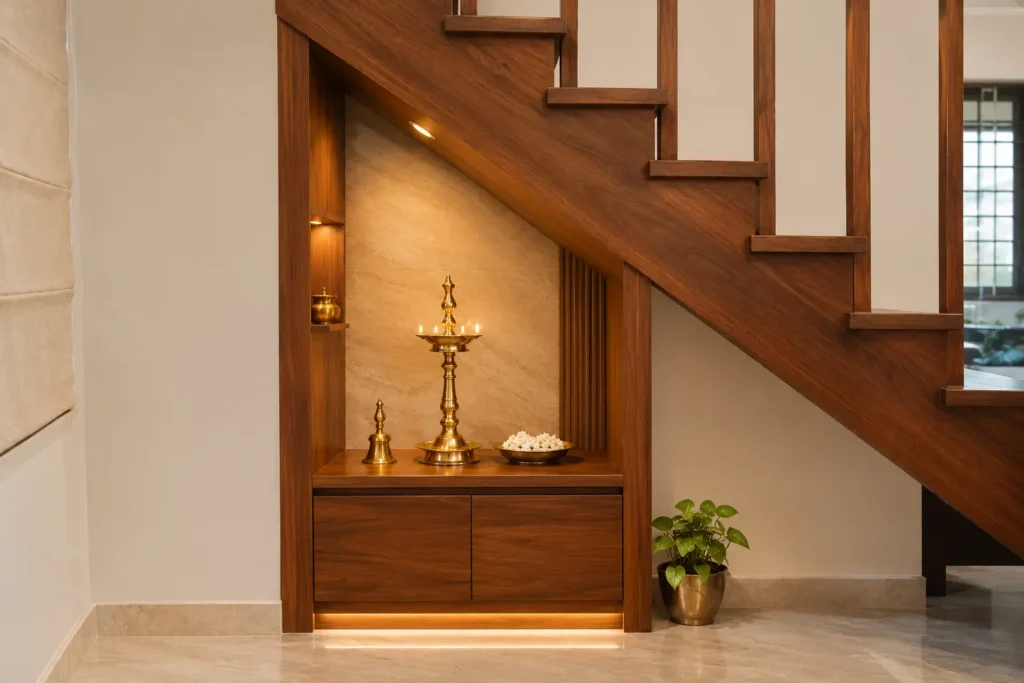
The space under a staircase is usually wasted. With a low wooden unit and a curtain or small door, it becomes a quiet, sheltered corner. Keep the ceiling height comfortable if people will stand there.
4. A corner cabinet with doors
Good for homes where the pooja area sits in the living room. Closed doors let you hide the shelf when guests are over and open it up during prayer time. It also keeps dust off the idols.
5. A jaali panel backdrop
A carved or CNC-cut jaali panel with soft light behind it creates a beautiful glow, and the pattern adds personality without crowding the space. Choose simple patterns if you want a calm look.
6. Traditional carved wood
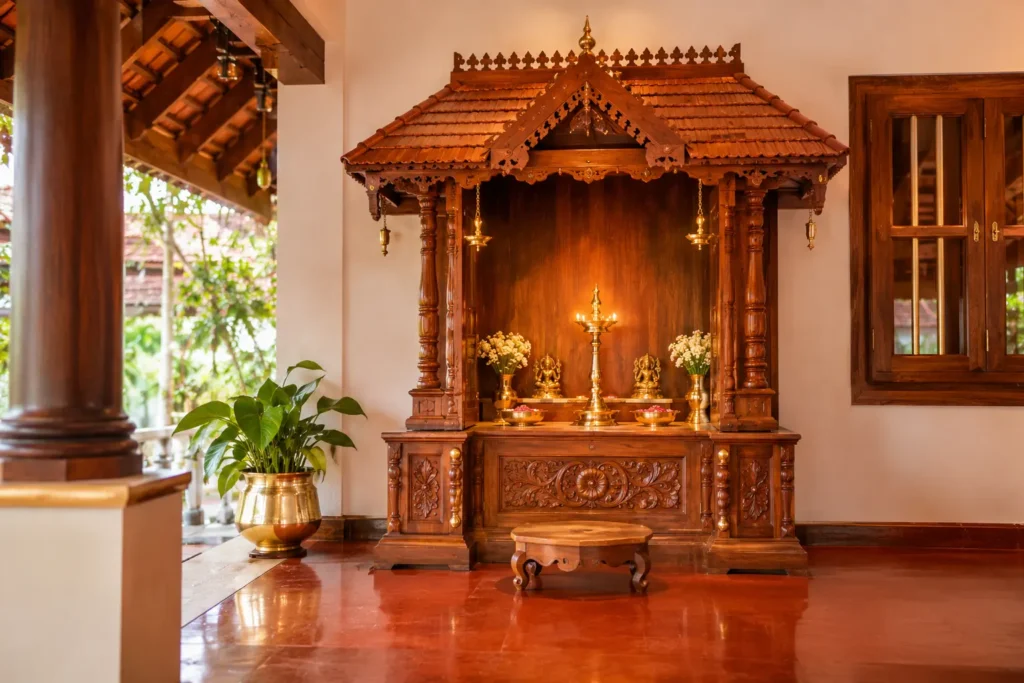
If your home leans towards a classic Kerala look, a carved wooden mandir with a slanted roof and brass details is hard to beat. Pair it with a Nilavilakku and a small stool and the corner immediately feels like home.
7. Marble or granite backdrop
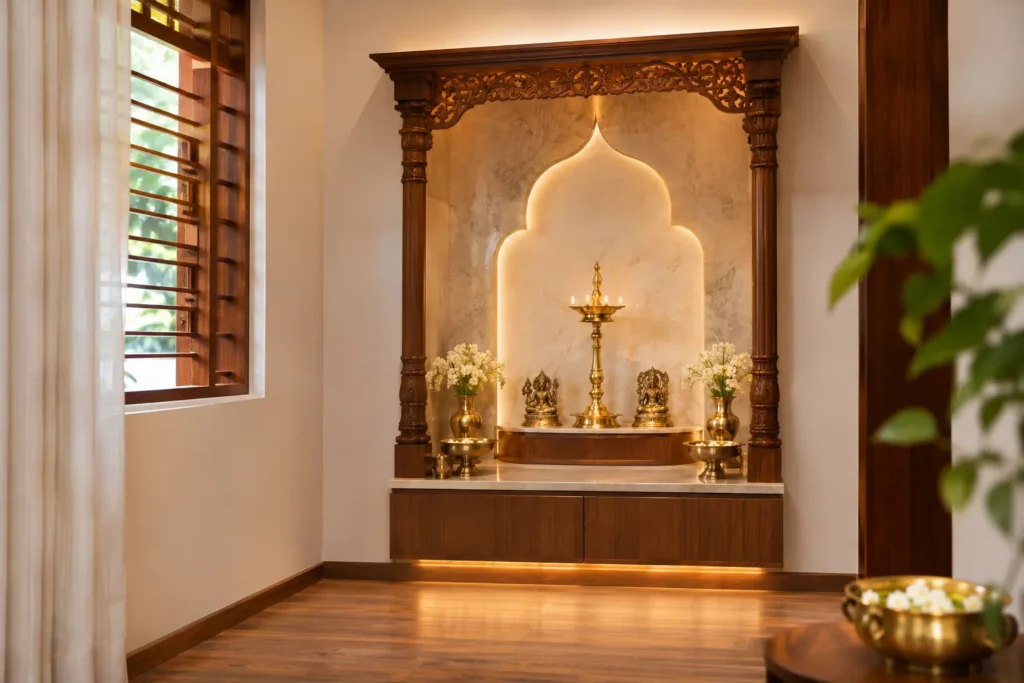
A stone backdrop is easy to wipe clean, which matters when you light lamps every day. White or cream marble gives a bright, fresh feeling, while darker stone suits a more traditional home.
8. A glass-door enclosed room
If you have a spare 4 by 4 feet, a small enclosed room with a glass or wooden door gives the family real privacy. Add a floor mat, a low shelf and good ventilation, and it becomes the most peaceful corner of the house.
9. Sliding shutters in the living room
For open-plan homes, a pooja unit with sliding shutters keeps the look neat. Shutters in the same finish as your TV unit or wardrobe make it blend in beautifully.
10. A hidden unit inside a storage wall
Some modern homes tuck the mandir inside a full-height storage wall. When closed, it looks like a plain panel. When opened, the lamp and idols appear. It suits people who want a minimalist living room.
11. A verandah or courtyard corner
In independent houses, a pooja corner near the courtyard or verandah brings in natural light and fresh air. A brass lamp, a small plant and a wooden bench are often all you need.
12. Minimal white and brass
A clean white backdrop, a slim wooden shelf and a brass lamp is a timeless combination. It suits small apartments, and it never looks dated.
Materials that last in Kerala’s weather
The monsoon, humidity and daily oil lamps put any pooja unit under stress. So the material you choose matters.
- Marine or BWP plywood holds up better against moisture than basic plywood, especially in coastal and humid areas.
- Solid wood such as teak or similar hardwoods looks traditional and ages well, but costs more.
- Stone or tile backdrops behind the lamp area protect the wall from oil and soot.
- Laminates and veneers give you many finishes at a reasonable cost. Choose good edge sealing so moisture can’t get in.
If you want to understand how climate affects material choices in more detail, our guide on best interior materials for Malappuram climate explains it clearly.
Lighting and safety: small details that make a big difference
Good lighting is what turns a plain unit into a peaceful space. Warm white light, around 2700K to 3000K, feels gentle and welcoming. Cool white tends to feel clinical.
Use a soft LED strip behind the idols or along the top edge, plus a small spotlight on the main deity if you like. Keep the wiring neatly hidden and away from the lamp area.
Safety matters just as much. Keep a non-combustible surface, such as stone, tile or metal, under the lamp. Leave enough gap between the flame and any wooden or fabric element above it. Good ventilation helps with smoke from incense and camphor, and it keeps the room fresh.
Mistakes we see again and again
- Building it last. When the pooja unit is planned after everything else, it ends up in whatever space is left.
- Too little storage. Lamps, oil, wicks, books and festival items need a home. Without a drawer, they end up scattered around the house.
- Wrong height. A mandir that is too low or too high feels awkward. Plan the height around how your family prays.
- Heavy design in a small space. Too much carving can make a compact corner feel crowded. Simple often looks richer.
- Ignoring the ceiling. A false ceiling or a beam right above the lamp can be a fire risk and look clumsy.
If you are planning a full interior project, it is also worth reading about the hidden costs of home interior projects so small items like this one don’t catch your budget off guard.
Quick answers to common questions
How much space does a pooja room need? A wall-mounted unit can fit in as little as 2 feet of wall width. If you want to sit inside, around 4 by 4 feet is comfortable.
Can a pooja unit go in a bedroom? It can, but many families prefer to keep it in a living area or a separate corner. If you must place it in a bedroom, closed doors or shutters are a respectful solution.
Is Vastu compulsory for a pooja room? No, it is a tradition many families choose to follow. A designer can help you find the best option within your layout, without hurting the look or the function of the space.
Should the pooja unit be under the staircase? Many families avoid it, while others are fine with it. If it matters to you, choose a different location, and speak to your designer about alternatives.
Plan your pooja space with Inddecore Interio
A good pooja corner is not about size or cost. It is about how it feels when you sit down in front of it. At Inddecore Interio, we design pooja spaces as part of the whole home, so the unit blends with your living room, your materials and your family’s habits.
Whether you are planning a new flat in Kochi, a house in Thrissur or a family home in Malappuram, we can help you plan it right from the start.
Book a free interior consultation: call or WhatsApp +91 96334 61561, or visit Our Website