
Almost every homeowner starts an interior project with a budget in mind. Yet, many are surprised when the final bill exceeds their expectations. The reason isn’t always rising material prices—it’s the hidden costs that are often overlooked during planning.
Whether you’re designing a new apartment, renovating a villa, or upgrading a modular kitchen, understanding these hidden expenses can save you thousands of rupees and prevent unnecessary stress.
In this guide, we’ll explore the most common hidden costs in home interior projects and share practical tips to keep your budget under control.
Why Do Interior Projects Go Over Budget?
Interior projects rarely exceed the budget because of a single expensive item. More often, costs increase due to multiple small decisions made throughout the project.
Common reasons include:
- Last-minute design changes
- Material upgrades
- Electrical modifications
- Additional carpentry work
- Labour variations
- Delivery and transportation charges
Planning these factors in advance helps avoid unexpected financial surprises.
Hidden Cost #1 – Civil Work Modifications
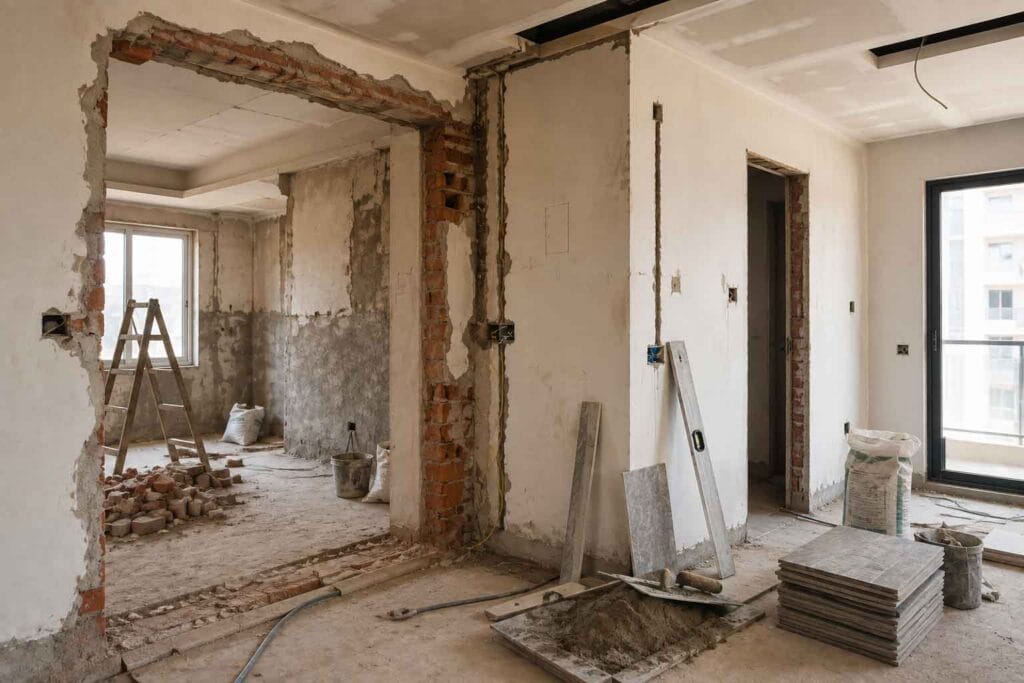
Many homeowners assume their builder has completed everything perfectly. However, once the interior design begins, adjustments are often required.
Examples include:
- Wall alterations
- Level corrections
- Waterproofing
- Tile replacement
- Ceiling repairs
These modifications can significantly affect the overall budget.
Hidden Cost #2 – Electrical and Plumbing Changes
Interior layouts frequently require changes to electrical and plumbing points.
Examples include:
- Extra power sockets
- Concealed wiring
- Smart switches
- LED strip lighting
- Kitchen plumbing adjustments
- Water purifier connections
Planning these during construction is much more economical than modifying them later.
Hidden Cost #3 – Premium Material Upgrades
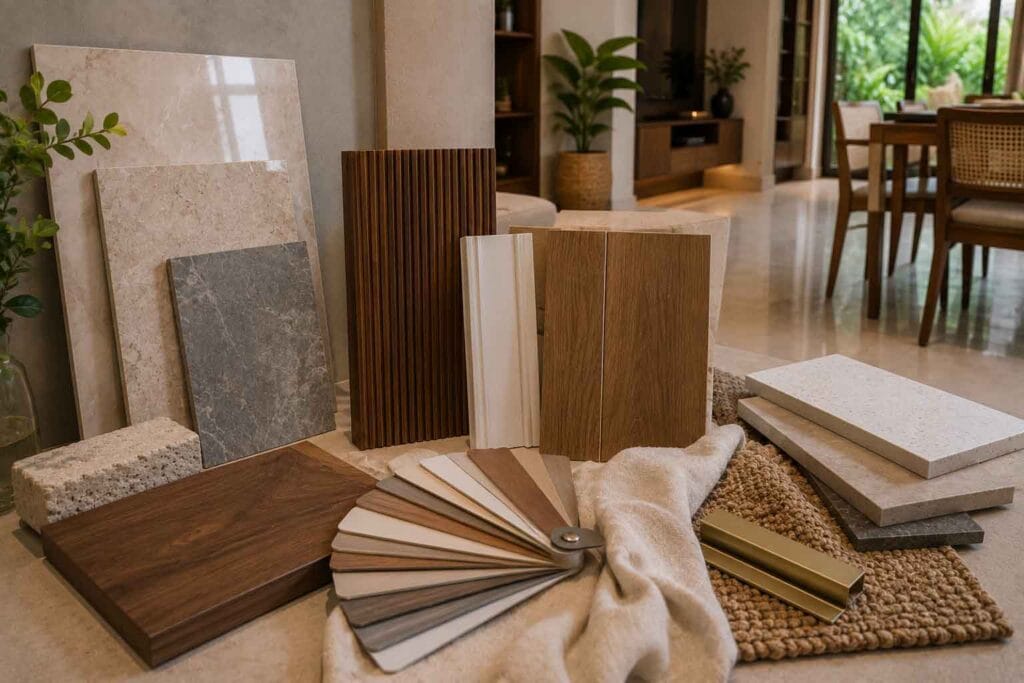
Many homeowners initially choose standard materials but later switch to premium options.
Examples:
- HDHMR instead of MDF
- Marine plywood instead of commercial plywood
- Acrylic finishes instead of laminates
- Quartz countertops instead of granite
- Imported hardware
While these upgrades improve durability and aesthetics, they can substantially increase the project cost.
Hidden Cost #4 – Hardware and Accessories
Cabinets are only part of the expense. The hardware used inside them also contributes to the final budget.
Examples include:
- Soft-close hinges
- Tandem drawers
- Lift-up mechanisms
- Pull-out pantry units
- Corner storage systems
- Wardrobe organizers
Premium hardware enhances convenience but comes at an additional cost.
Hidden Cost #5 – False Ceiling and Lighting
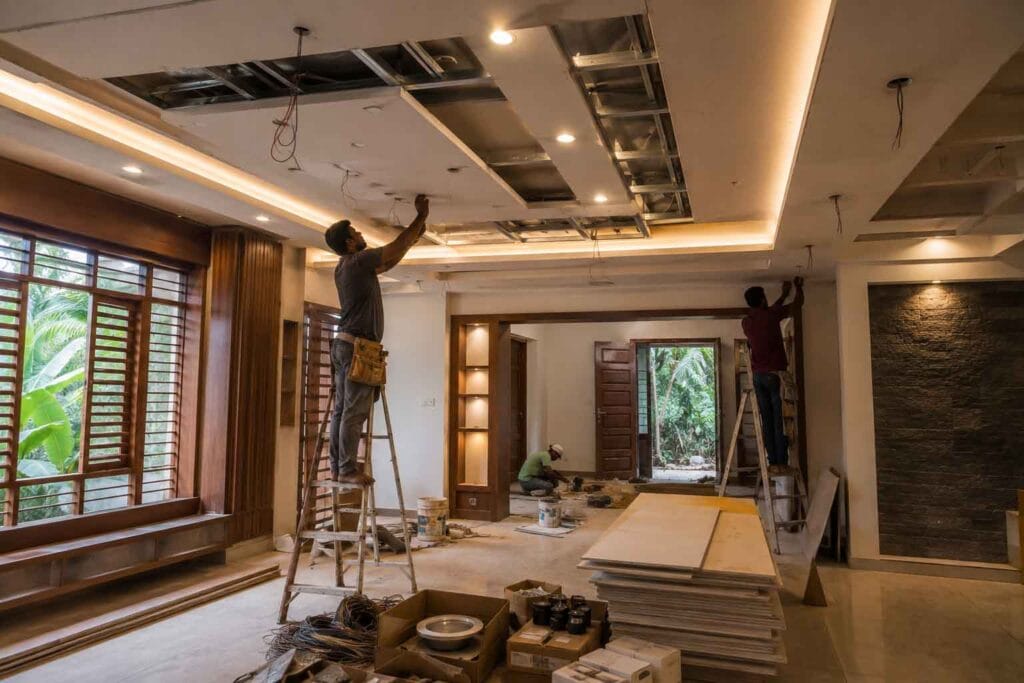
Many homeowners budget for a false ceiling but forget to include decorative lighting.
Additional expenses may include:
- Cove lighting
- LED profiles
- Spotlights
- Pendant lights
- Decorative chandeliers
- Dimmers
- Smart lighting systems
Lighting plays a crucial role in the final appearance of your interiors.
Hidden Cost #6 – Site Logistics and Transportation
Project location can influence overall costs.
Factors include:
- Material transportation
- Loading and unloading
- Lift access
- Multiple deliveries
- Remote project locations
These charges are often overlooked during initial budgeting.
Hidden Cost #7 – Design Changes During Execution
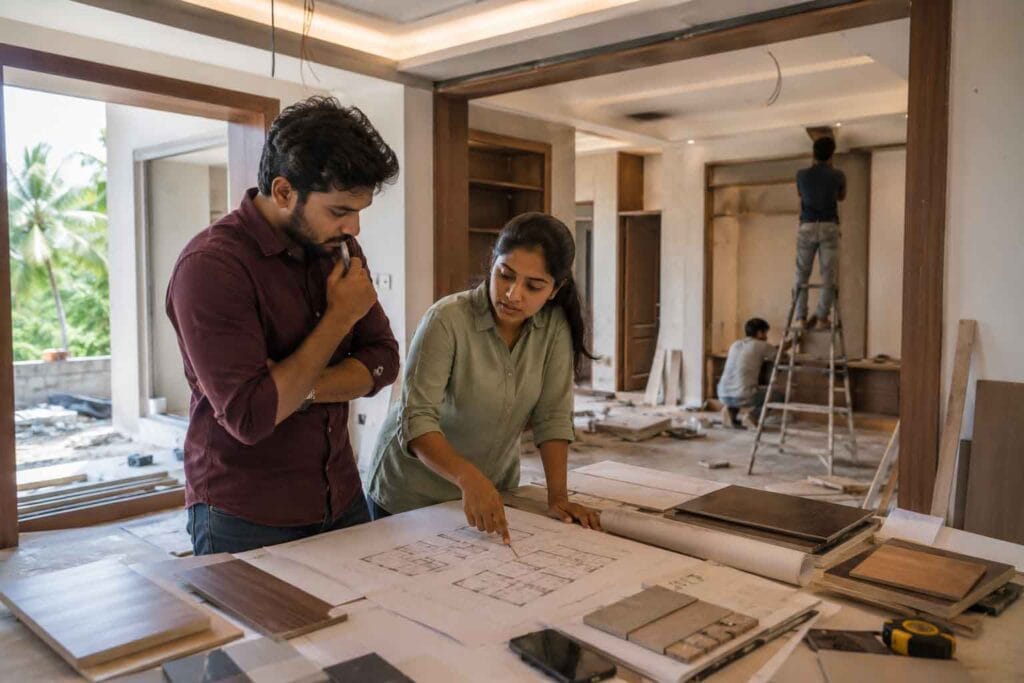
One of the biggest reasons for cost overruns is changing decisions after work has started.
Examples include:
- Changing colour themes
- Redesigning wardrobes
- Modifying kitchen layouts
- Adding new furniture
- Relocating electrical points
Every revision may involve additional materials, labour, and time.
Hidden Cost #8 – Appliances and Loose Furniture
Interior quotations often exclude:
- Refrigerator
- Washing machine
- Television
- Sofa
- Dining table
- Mattresses
- Curtains
- Decorative accessories
Confirm whether these items are included before signing the agreement.
Hidden Cost #9 – GST and Other Taxes
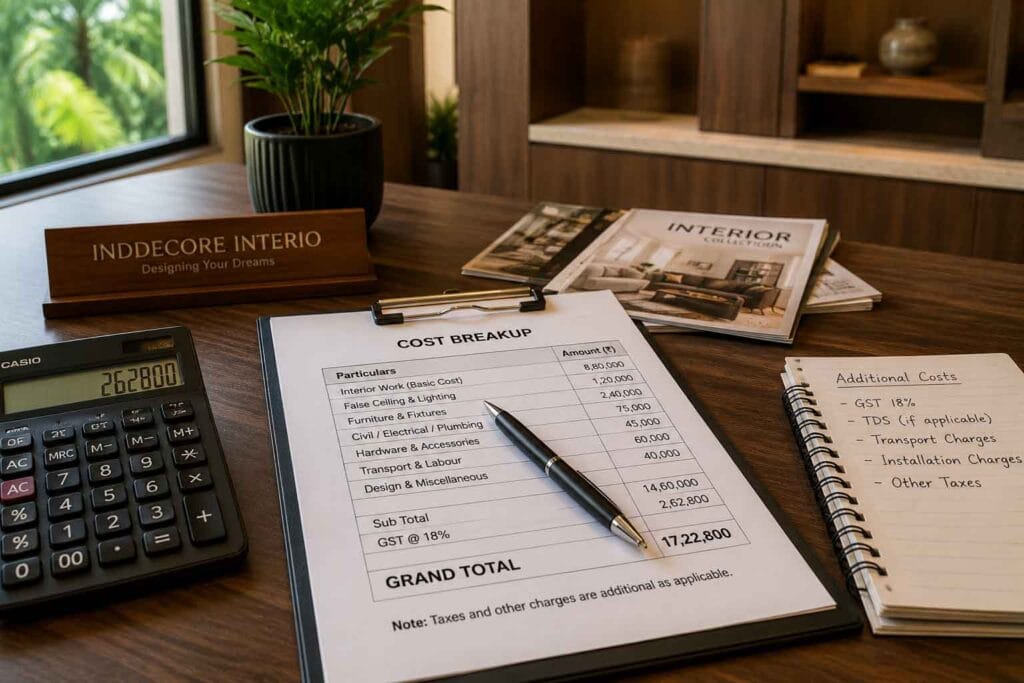
Always verify whether the quoted price includes:
- GST
- Delivery charges
- Installation charges
- Design fees
- Site supervision costs
A lower quotation may not always represent the actual project cost.
How to Avoid Hidden Interior Costs
Follow these practical steps:
- Finalize the design before execution.
- Request a detailed itemized quotation.
- Compare specifications, not just prices.
- Set aside a contingency fund of 10–15% of your total budget.
- Choose durable materials suitable for Kerala’s climate.
- Clarify what is included and excluded in the contract.
- Work with an experienced interior design company that values transparent pricing.
Why Transparency Matters
At Inddecore Interio, we believe every homeowner deserves clear pricing with no unpleasant surprises. We provide detailed project estimates, explain material options, and guide clients through every stage of the interior design process, helping them make informed decisions that align with their budget.
Conclusion
Hidden costs don’t have to derail your dream home. With proper planning, transparent communication, and a clear understanding of where additional expenses can arise, you can stay in control of your budget and enjoy a smoother interior design journey.
Before starting your project, take the time to discuss every aspect of the quotation with your interior designer. A well-planned project is not only more cost-effective—it also delivers better results.